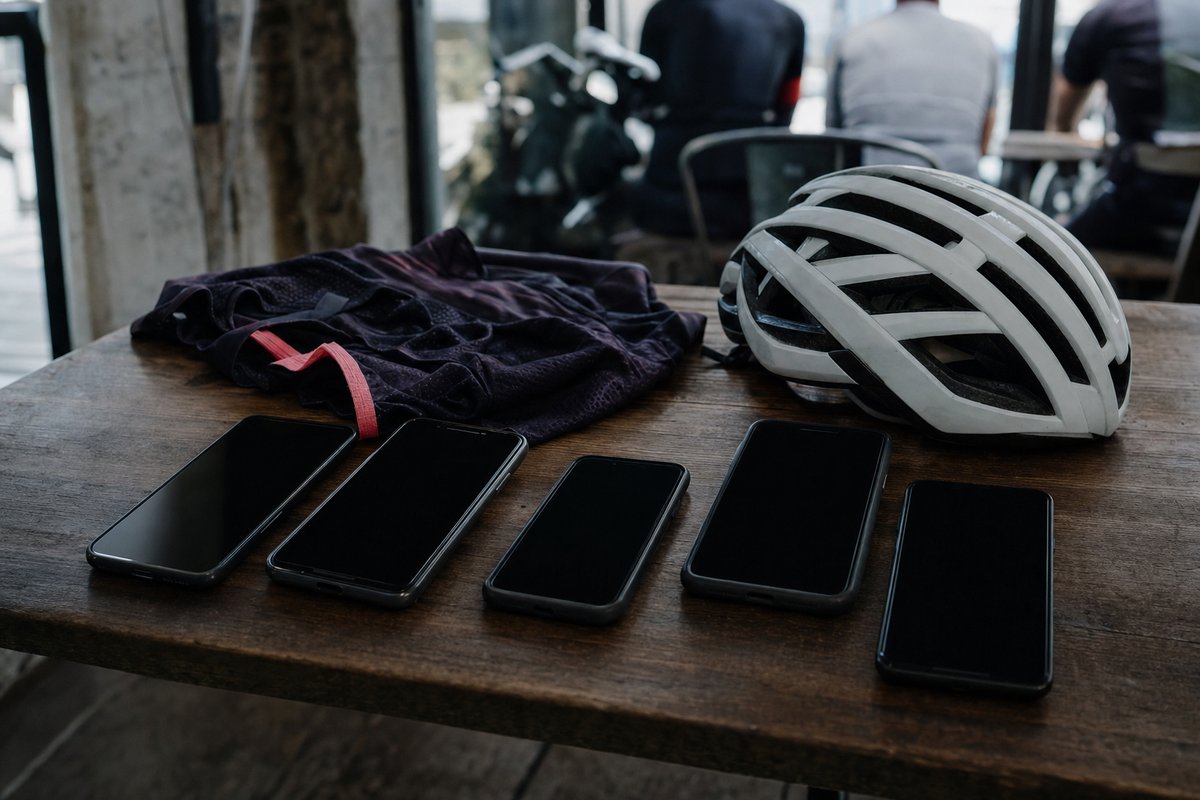
Tracking apps differ less in what they record than in what they do with it afterwards. Nearly all read the same satellite and sensor data. The distinctions that matter are the social layer, the analysis, the export options and how each handles the data afterwards. Those four decisions, not the recording, are what you choose between.
Choosing the best running app or best cycling app
These pages predate the instrument work on this site and cover the platforms from a user's perspective, not a data one. They remain accurate about what each service does, and they sit alongside the reference section instead of replacing it. Read them for what each platform does, and the reference pages for what the numbers mean.
- 01
MapMyRide against Strava
Two cycling platforms compared on what they record, what they compute from it, and the community that decides which leaderboard is worth appearing on.
Comparison
- 02
After Endomondo
Where to go once a long-running tracking service closes, and what to check about an archive before a history of rides becomes unreachable.
Migration
- 03
Nike Run Club for beginners
Guided runs, training plans and starting from nothing, including which of the guided sessions are worth the time early on.
Running
- 04
Runtastic community features
Groups, challenges and the open question of whether social features change behaviour or only make existing habits more visible.
Community
- 05
Apps used by elite athletes
Which tools appear in genuinely serious training, what they add over a consumer app, and which of the differences matter to anybody else.
Training
Choosing on export, not on features
The feature most worth checking before committing to a platform is the one nobody demonstrates: how completely your data comes back out. Services close, change terms and reprice. A platform that returns original files leaves you free; one that returns simplified tracks does not. Test it once, early, while leaving is still hypothetical.
This applies regardless of which app suits your training. Every service on this page is competent at recording a ride. They are not equally good at handing it back, and the difference only becomes visible when it is too late to act. By then the account you would export from has usually gone.
What actually differs between tracking apps
Recording is close to a solved problem. Every app in this category reads the same satellite and sensor data through the same operating-system interfaces, so accuracy is a property of the hardware and the recording interval instead of of the software reading it. Two apps on one phone will produce near-identical traces of the same ride.
The real differences sit above that layer: whether a social graph exists and whether it is competitive or cooperative, how much analysis is free, whether training load is modelled at all, and how completely an export returns what the device originally wrote. Only the last of those is difficult to reverse once you have committed to a platform.
That last point separates apps more than any feature list does. Two services can record an identical ride and hand back very different things a year later, and nobody discovers which is which until they try to leave. That asymmetry is worth more attention than any comparison of features deserves.
| Layer | Varies? | Note |
|---|---|---|
| Recording accuracy | Barely | Set by hardware and recording interval |
| Social model | Greatly | Competitive leaderboards or cooperative totals |
| Training analysis | Greatly | Usually behind a subscription |
| Export completeness | Greatly | Original files, or a simplified track |
Tracking app questions
Does the tracking app change how accurate my ride is?
Hardly at all. Accuracy comes from the receiver, its view of the sky and how often it records. Differences in reported distance between two apps recording the same ride come from smoothing and interpolation choices rather than from one measuring better than another. Put the same file through both and the distances still differ slightly.
Can I use more than one app at once?
Yes, and the sensible way is to record on one device and sync the file to the others instead of running two apps simultaneously. Simultaneous recording drains the battery quickly and produces two files that will disagree slightly for no useful reason. One recording, synced onward, keeps a single authoritative version of each ride.
Which app is best for a complete beginner?
One with guided sessions, not the one with the most analysis. A beginner benefits from being told how hard to go, not from a training-load chart, and the characteristic beginner mistake of running or riding too hard is what guided coaching is designed to correct. Analysis becomes useful later, once there is a habit to analyse.
What should I check before committing to a platform?
How completely it exports. Request the bulk archive once and look at what comes back. If it returns the original device files your history is portable; if it returns simplified tracks, every physiological channel is discarded the moment you leave. Do that test in the first week, not in the last one.
On getting files back out of a platform, see data export and formats.